
Collections
The museum has different collections with some specimens on display and others in our warehouses; each one has a database and an internal file where you have the information of each of the pieces. We currently have a collection of rocks, fossils, osteological, biological, ancient objects and endemic plants of the tropical dry forest of La Tatacoa. The objective of our collections is to protect the historical and cultural memory of the region, also to have osteological material of species that inhabit La Tatacoa today, so that students and researchers can make comparisons with the fossil species found in the Tatacoa Desert.
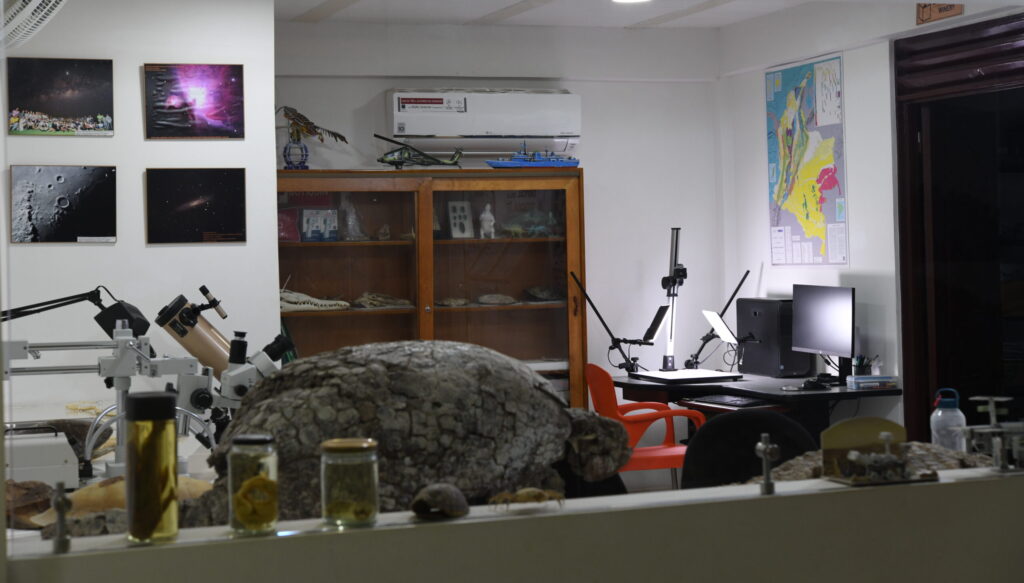
We have 7 collections of objects and specimens that have been collected and donated by people who visit the museum as well as institutions that support the project. The following is a description of each of the collections, which have a collection number and information on each of the specimens:
Paleontological Collection
This is the largest of the MHNT's collections and includes more than 4,000 fossil specimens from different periods of Colombia's geological history. It has fossils from the Pleistocene (from 1 to 10,000 years ago), fossils from Middle Miocene (from 13 and 11 million years ago), and fossils from the Upper Cretaceous (from 100 million years ago). Some of the fossils have already been prepared, some have already been published in scientific journals and others are being studied for publication in the near future.
Osteological Collection
It is the second largest collection of the MHNT. It is made up of remains of fauna that currently live in the Tatacoa Desert and other specimens that have been donated by a professor from the University of the Andes. The skeletons and remains of current fauna are used to compare with the fossil remains. The collection includes remains of turtles, caimans, crocodiles, snakes, monkeys, marsupials, birds, fishes and crustaceans, among others.
Geological Collection
This collection contains of rocks of igneous, sedimentary and metamorphic origins. Most of rocks have been found in the Tatacoa Desert and in other regions of the department of Huila, whose objective is to show the diversity of existing rocks and the processes that gave rise to them. Among the most common are mudstones, sandstones, conglomerates, andesites, limestones, marble, granite and some minerals such as quartz, pyrite, calcite, gypsum, etc.
Archaeological Collection
The northern area of the municipality of Villavieja was inhabited by several indigenous groups that left their mark in our territory through lithic objects, ceramics, petroglyphs and other evidence that have been preserved over the years. These archaeological objects allow us to understand part of our history and how it has changed on a cultural and natural level. The museum has ceramics, lithic metates, and other objects belonging to these indigenous people from the Tatacoa Desert.
Biological Collection
This collection has specimens preserved in 70% ethyl alcohol such as snakes, fishes, arthropods, mammals and other species that have been donated by residents of the Tatacoa Desert region. La Tatacoa Natural History Museum has the first collection of wild bees from the dry tropical forest of La Tatacoa, with 62 species on display from the104 species identified in the area.
Collection of cacti and agaves
The museum has a collection of cacti that live in the tropical dry forest of the Tatacoa. So far we have identified 9 species that are the most abundant in the area, but it is possible that there are others that have not been identified. These most common species are the Cardón, Pitaya cactus, Candelabro, Arepo espinos, Nopal, Cola de Zorro, Cuatro Filos, Cabeza de Negro and Melcocha. We also have a collection of endemic agaves of the region among which the Fique, the American agave, and the mother-in-law's tongue stand out, among others.
Collection of antique objects
Many equipment and tools have been a crucial part of the history that has sought to optimize the work and provide comfort to people on their domestic or work tasks. The museum has collected some coal irons, the first electric irons, petromax lamps, old televisions, old cameras, old fumigators among other objects that have been part of our history so that new generations should not forget because they are testament of the scientific advances that humanity has had.

 English
  Spanish